
Dental implant treatment Konyaaltı Antalya
Dental implant treatment Konyaaltı Antalya is an important option for patients who have missing teeth, difficulty chewing, unstable dentures, visible gaps in the smile, or long-term tooth loss that affects both function and confidence. Dr. Yaşar Özdemir plans implant treatment in Konyaaltı, Antalya with a detailed approach that considers jawbone structure, gum health, bite balance, facial aesthetics, number of missing teeth, oral hygiene habits, and the final prosthetic tooth that will be placed on the implant. The goal is not simply to place an implant, but to create a stable, natural-looking and functional result that can be maintained properly over time.
Tooth loss can affect much more than appearance. When a tooth is missing, neighboring teeth may gradually tilt into the empty space, the opposing tooth may move downward or upward, chewing forces may become unbalanced, and the bone in the missing tooth area may begin to shrink. For this reason, implant treatment should be evaluated as a comprehensive dental rehabilitation process rather than a single surgical procedure.
Dr. Yaşar Özdemir evaluates each implant case individually. A patient with one missing front tooth, a patient with several missing molars, and a patient using a full removable denture do not need the same plan. The location of the missing tooth, bone volume, gum thickness, smile line, sinus position, nerve pathway and bite forces all influence the treatment strategy.
Dental implant treatment Konyaaltı Antalya: Who is a suitable candidate?
Dental implant treatment Konyaaltı Antalya may be suitable for patients who have one or more missing teeth and want a fixed solution that feels closer to natural teeth than removable alternatives. Single-tooth implants can replace one missing tooth without cutting the neighboring healthy teeth. Multiple implants can support bridges when several teeth are missing. In full tooth loss cases, implant-supported fixed or removable prosthetic options may be considered depending on bone structure and patient needs.
However, implant suitability is not decided only by the presence of a missing tooth. The jawbone must have enough height, width and quality to support the implant. The gums should be healthy, and active infections should be treated before implant placement. General health conditions, smoking, diabetes control, certain medications, oral hygiene habits and teeth grinding must also be evaluated before treatment.
Some patients can begin implant treatment directly after diagnosis. Others may need preparation first, such as gum treatment, tooth extraction, bone grafting or sinus lift. If a tooth has been missing for many years, bone loss may be more advanced. In such cases, the implant area may need additional planning before surgery.
Dr. Yaşar Özdemir explains suitability clearly after examination. The patient learns whether an implant can be placed directly, whether additional procedures are needed, and what kind of final tooth can be planned after healing.
Dental implant treatment Konyaaltı Antalya and the importance of diagnosis
Dental implant treatment Konyaaltı Antalya should always begin with a detailed diagnosis. A successful implant plan depends on understanding the bone, gum tissue, neighboring teeth, bite relationship and future prosthetic design. Placing an implant without considering the final crown or bridge can lead to problems with appearance, cleaning, chewing comfort or long-term stability.
During the examination, the missing tooth area is evaluated clinically. The dentist checks how long the tooth has been missing, whether the neighboring teeth have shifted, whether the opposing tooth has moved, whether the gum tissue is healthy, and whether there is enough space for the final restoration. In some cases, the visible gap may look simple, but the bone structure underneath may be limited.
Radiographic evaluation is also important. Panoramic X-rays and, when needed, three-dimensional imaging can help assess bone height, bone width, sinus position, nerve pathways and anatomical limitations. In the upper back jaw, the sinus floor may be close to the implant area. In the lower jaw, the nerve canal must be carefully considered.
Dr. Yaşar Özdemir uses diagnosis to create a treatment sequence that is realistic and safe. The patient is informed not only about the implant placement, but also about healing time, prosthetic design, maintenance and possible additional procedures.
Dental implant treatment Konyaaltı Antalya for single tooth loss
Dental implant treatment Konyaaltı Antalya is often preferred for single tooth loss because it can restore the missing tooth area without preparing the adjacent teeth for a traditional bridge. This is especially valuable when the neighboring teeth are healthy and do not need crowns. A single implant can support an individual crown that is planned according to the patient’s bite and smile.
In the front region, single implant treatment requires very careful aesthetic planning. The gum line, tooth shape, color, emergence profile and symmetry with neighboring teeth must be considered. If the implant is placed too far forward, too far backward, too deep or at the wrong angle, creating a natural-looking crown may become more difficult.
In the back region, the main focus is chewing function. The implant crown must contact the opposing tooth correctly and should not receive excessive pressure. If the crown is too high or the bite is not balanced, unnecessary force may affect the implant, opposing tooth or prosthetic components.
Dr. Yaşar Özdemir evaluates single-tooth implants as both a surgical and restorative treatment. The implant position and final crown design are planned together so that the result looks natural and functions comfortably.
Dental implant treatment Konyaaltı Antalya for multiple missing teeth
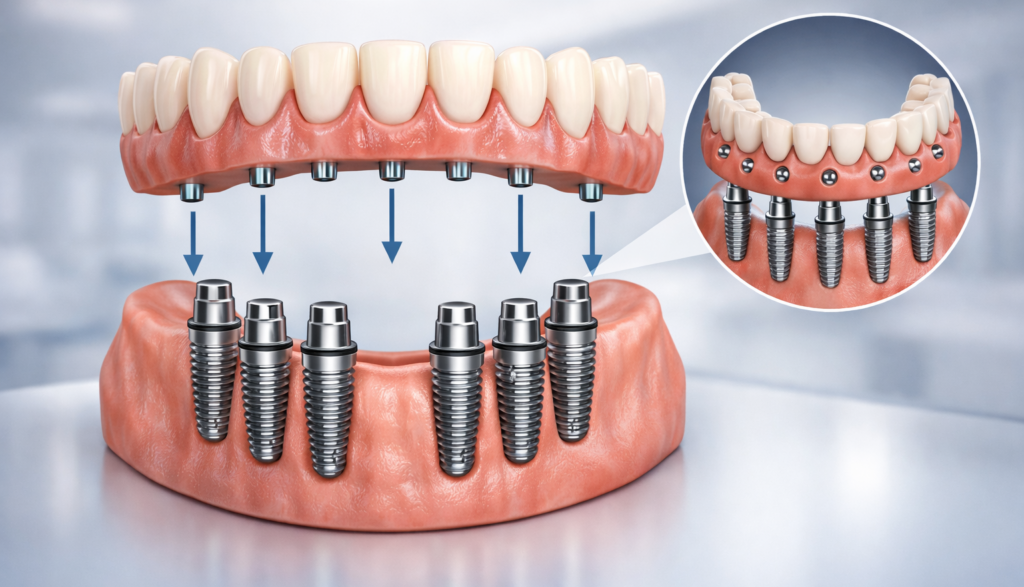
Dental implant treatment Konyaaltı Antalya can also be planned for patients with several missing teeth. In multiple tooth loss cases, every missing tooth does not always require a separate implant. Depending on the bone structure, missing tooth area and bite forces, a certain number of implants may support an implant bridge.
This type of planning requires careful evaluation. If the missing teeth are in the back region, chewing forces are stronger. The number of implants, implant position, prosthetic design and bite distribution become especially important. If the support is insufficient or the bridge is too long, the prosthetic structure may be exposed to excessive stress.
In long-term tooth loss cases, neighboring teeth may have moved into the empty space. This can reduce the available room for implant-supported teeth. Sometimes orthodontic adjustment, gum treatment or prosthetic planning is required before the implant stage. The treatment must be organized in the correct sequence.
Dr. Yaşar Özdemir plans multiple implant cases according to the patient’s functional needs. The aim is to create a stable, cleanable, natural-looking and comfortable restoration rather than simply replacing missing teeth one by one.
Full mouth implant options in Antalya
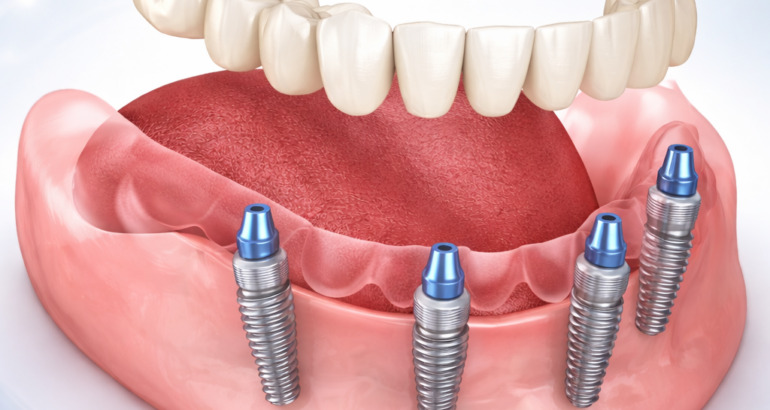
Patients who have lost all teeth in the upper jaw, lower jaw or both jaws may be evaluated for implant-supported prosthetic solutions. Some patients use removable dentures for years but struggle with movement, reduced chewing ability, speech problems or lack of confidence while eating. Implant-supported solutions may provide more stability in suitable cases.
Full mouth implant planning depends strongly on bone volume. A patient who recently lost teeth may have more bone support than someone who has used removable dentures for many years. In long-term full tooth loss, bone resorption can be significant, especially in the upper jaw. This may affect implant number, implant position and prosthesis type.
There are different options for full-mouth rehabilitation. Some patients may be suitable for fixed implant-supported bridges. Others may benefit from implant-retained removable dentures. The correct option depends on anatomy, hygiene ability, expectations, budget and long-term maintenance capacity.
Dr. Yaşar Özdemir evaluates full-mouth implant treatment with attention to chewing comfort, speech, facial support, cleaning access and realistic expectations. A fixed solution is not only about stability; it must also be hygienic and maintainable.
Bone loss before implant treatment
Bone loss is one of the most important factors in implant planning. After a tooth is extracted, the bone in that area may gradually shrink because it no longer receives natural stimulation from the tooth root. The longer the tooth remains missing, the more bone reduction may occur. Gum disease, infection, trauma and poorly fitting dentures can also contribute to bone loss.
If there is not enough bone for implant placement, additional procedures may be considered. Bone grafting can help rebuild or support the implant area in selected cases. Guided bone regeneration may be planned depending on the defect. In the upper back jaw, sinus lift may be required when the sinus floor is close and bone height is limited.
Not every bone loss case requires the same solution. Some patients may still be suitable for standard implants. Others may need grafting before implant placement. In more advanced upper jaw bone loss cases, alternative implant approaches may be evaluated.
Dr. Yaşar Özdemir explains bone condition clearly before treatment. The patient learns whether the implant can be placed directly or whether the area must first be prepared for a safer and more stable result.
Sinus lift and upper jaw implants
Sinus lift is a procedure that may be required before placing implants in the upper back jaw. In this region, the maxillary sinus is located above the roots of the upper premolars and molars. After tooth loss, the bone height may decrease and the sinus cavity may occupy more space, leaving insufficient bone for implant placement.
A sinus lift aims to create additional bone support by carefully lifting the sinus membrane and placing bone graft material in the area. This does not apply to every implant patient. It is only considered when the available bone height is not enough for a stable implant.
In some cases, the implant can be placed at the same time as the sinus lift. In other cases, the grafted area needs time to heal before implant placement. The decision depends on the remaining bone height, implant stability and the overall treatment plan.
Dr. Yaşar Özdemir evaluates the sinus region carefully before upper jaw implants. Patients are informed about why sinus lift may be needed, how it affects the timeline, and what should be considered during healing.
Is implant treatment painful?
Many patients feel anxious about implant surgery because they worry about pain. Implant placement is usually performed under local anesthesia, so pain is controlled during the procedure. The patient may feel pressure or vibration, but sharp pain should not be expected when anesthesia is effective.
After the procedure, mild swelling, tenderness, pressure sensation or discomfort can occur. The level of post-treatment discomfort depends on the number of implants, the surgical area, whether bone grafting or sinus lift was performed, and the patient’s healing response. A single straightforward implant and a complex grafting case should not be compared as the same experience.
Following the dentist’s instructions is very important after surgery. Soft foods, careful oral hygiene, avoiding smoking, using prescribed medications correctly and attending follow-up visits all support healing. If severe pain, increasing swelling, bleeding, fever or bad taste develops, the patient should contact the clinic for evaluation.
Dr. Yaşar Özdemir explains the procedure and aftercare clearly so that patients know what is normal and when they should seek control.
Healing process after dental implant placement
After implant placement, the implant needs time to integrate with the jawbone. This biological process is called osseointegration. During this period, the implant becomes stable inside the bone, creating the foundation for the final crown, bridge or prosthesis. Healing time varies from patient to patient.
Several factors affect healing: bone quality, implant location, general health, smoking, oral hygiene, additional procedures and bite forces. Implants placed in healthy dense bone may progress differently from implants placed after grafting. Upper jaw and lower jaw healing times may also differ.
During healing, the implant area should not be overloaded. If a temporary tooth is used, it must be designed carefully so that it does not place excessive pressure on the implant. Patients who grind or clench their teeth may require additional protection.
Dr. Yaşar Özdemir follows the healing process according to the patient’s case. The final prosthetic phase is planned only when the implant is ready to support the restoration safely.
Implant-supported crowns and prosthetic design
An implant is only one part of the treatment. The visible tooth placed on top of the implant is just as important. The implant-supported crown or bridge must be designed with the correct color, shape, contact points, gum profile and bite relationship. A well-placed implant can still cause problems if the upper restoration is poorly planned.
In the front region, the crown must blend with the smile. The gum contour, tooth length, surface texture and shade must be compatible with neighboring teeth. If the patient has a high smile line, aesthetic planning becomes even more delicate.
In the back region, bite forces are more important. The crown should not be too high, too wide or difficult to clean. The contact with opposing teeth must be balanced. Overloading may lead to porcelain fractures, screw loosening or discomfort.
Dr. Yaşar Özdemir plans implant-supported restorations with both function and aesthetics in mind. The final tooth should not only fill a gap; it should work naturally within the mouth.
Dental implant maintenance and oral hygiene
Implants do not decay like natural teeth, but the tissues around implants can become inflamed if plaque accumulates. This means implant maintenance is essential. Healthy gums and proper cleaning are necessary for long-term implant stability.
Patients should brush regularly and clean between teeth and around implant restorations. Implant bridges may require special floss, interdental brushes or water flossers depending on the design. If food and plaque remain under the prosthesis, gum inflammation and implant-related tissue problems may develop.
Regular dental check-ups help monitor the implant, prosthetic screws, crown or bridge, gum tissue and bite contacts. Patients with teeth grinding should be followed more carefully because excessive forces can affect implant-supported restorations.
Dr. Yaşar Özdemir provides practical aftercare instructions according to the patient’s restoration type. Implant treatment continues after placement; long-term success depends on regular maintenance and responsible home care.
Dental implants and teeth grinding
Teeth grinding and clenching must be considered before implant treatment. Bruxism can create forces much stronger than normal chewing. These forces may affect natural teeth, fillings, crowns and implant-supported restorations. Patients who wake up with jaw fatigue, headaches, worn teeth or broken fillings should mention these symptoms before implant planning.
If a patient grinds their teeth, the implant-supported crown or bridge must be designed carefully. Bite contacts should be balanced, and excessive force should be avoided. In some cases, a night guard may be recommended to protect both natural teeth and implant restorations.
Ignoring bruxism can shorten the lifespan of restorations. Porcelain chipping, screw loosening or discomfort may occur when implant-supported teeth are exposed to uncontrolled force. This is why functional evaluation is as important as surgical planning.
Dr. Yaşar Özdemir evaluates bite and muscle activity when planning implant treatment. The goal is not only to replace missing teeth but also to protect the final result from excessive stress.
Dental implant treatment cost in Konyaaltı Antalya
The cost of implant treatment varies depending on the patient’s individual plan. A single implant, multiple implants, implant-supported bridges and full-mouth implant rehabilitation are not priced the same. The number of missing teeth, implant system, bone grafting needs, sinus lift, temporary teeth, final crown material and complexity of the case all influence the treatment cost.
It is not accurate to evaluate implant treatment only by the implant screw itself. Diagnosis, imaging, surgical planning, implant components, prosthetic design, laboratory work, follow-up visits and long-term maintenance all contribute to the treatment process. A low-cost plan that ignores bone condition or prosthetic design may create higher risks later.
If bone grafting or sinus lift is needed, the treatment becomes more comprehensive. If the final restoration requires zirconium crowns, multiple units or full-arch prosthetics, the prosthetic phase also affects the total cost. For this reason, the most accurate cost information can only be given after examination.
Dr. Yaşar Özdemir explains the treatment scope clearly before starting. Patients understand which procedures are needed, why they are needed and how the treatment plan is structured.
What should patients consider before choosing implant treatment?
Choosing implant treatment should not be based only on price or speed. A good implant plan requires accurate diagnosis, sterile surgical conditions, proper bone evaluation, healthy gums, correct implant positioning, well-designed prosthetics and regular follow-up. The quality of the final result depends on all these steps working together.
Patients should ask important questions before treatment: Is my bone structure suitable? Do I need bone grafting or sinus lift? How many implants are planned? What type of final tooth will be used? How long will healing take? How will I clean the implant? Do I grind my teeth? Will I need a night guard?
A well-informed patient can follow the process more confidently. Implant treatment is not a quick cosmetic procedure; it is a long-term dental investment that must be planned with care. The final restoration should be functional, natural-looking and easy to maintain.
Dr. Yaşar Özdemir gives patients clear explanations before treatment. This helps them understand the reason behind each step and make a more confident decision.
Dr. Yaşar Özdemir for implant planning in Konyaaltı Antalya
Dr. Yaşar Özdemir plans implant treatment according to the patient’s oral structure, bone volume, gum health, aesthetic expectations and functional needs. A single missing tooth, multiple missing teeth, full tooth loss, old denture discomfort, front tooth aesthetics and bone deficiency all require different treatment strategies.
The treatment process focuses on more than placing an implant. The final tooth must be planned from the beginning. Its color, shape, gum relationship, bite contact and cleaning access are all important. If needed, gum treatment, bone grafting, sinus lift, teeth grinding control or aesthetic smile planning may be included in the treatment sequence.
For patients looking for dental implant treatment in Konyaaltı Antalya, the first step is a detailed consultation. This allows the missing tooth area, bone condition, treatment options, timeline and maintenance requirements to be clearly understood before treatment begins.
Dr. Yaşar Özdemir offers an implant planning approach that combines surgical accuracy, natural aesthetics, chewing comfort and long-term oral health.
Contact
You can contact Dr. Yaşar Özdemir for dental implant consultation, missing tooth evaluation, bone structure analysis, sinus lift planning, implant-supported crowns, full-mouth implant options or aesthetic implant treatment in Konyaaltı Antalya.
Address: Öğretmenevleri Mah. 922 Sokak No:1 Kat:1-13 Konyaaltı / ANTALYA
English Line: +90 539 301 62 51
Russian Line: +90 533 596 11 23
Contact Line: +90 507 908 63 57
E-mail: info@dryasarozdemir.com
If you want to replace missing teeth with a carefully planned, natural-looking and functional implant solution, you can take the first step today with a personalized consultation by Dr. Yaşar Özdemir in Konyaaltı Antalya.