

Invisalign Konyaaltı
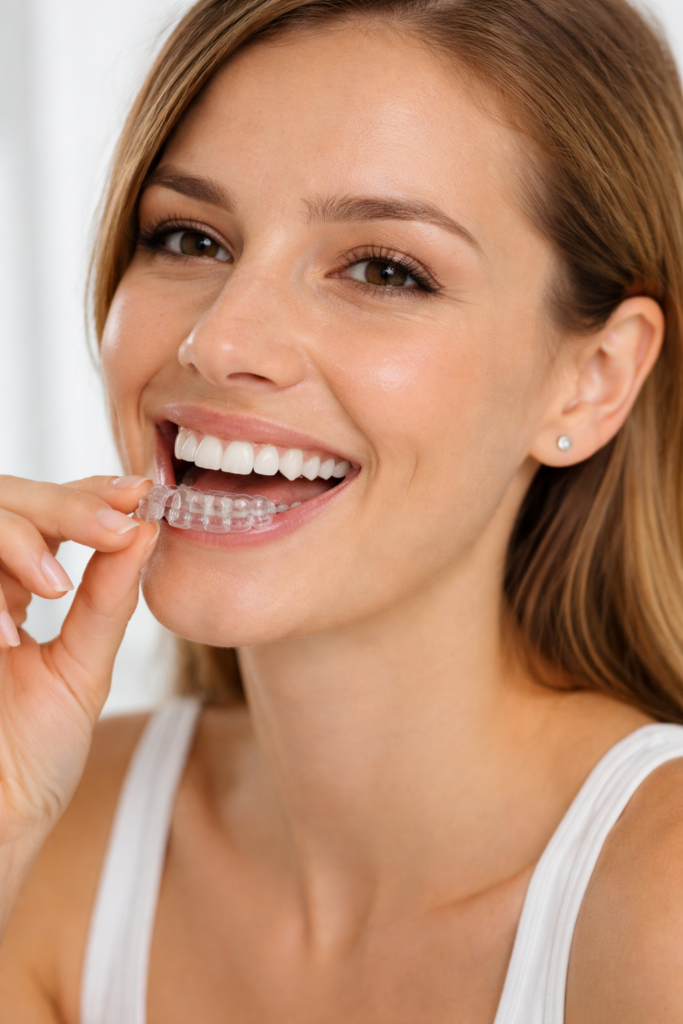
Invisalign Konyaaltı is a focused search for patients who want to correct crowded teeth, gaps, mild to moderate bite problems or smile misalignment with clear aligners instead of traditional visible braces. Dr. Yaşar Özdemir provides personalised Invisalign evaluation in Antalya Konyaaltı by considering tooth position, jaw relationship, bite balance, gum health, oral hygiene habits and the patient’s daily lifestyle expectations. The aim is not only to create straighter-looking teeth, but also to support a healthier bite, easier cleaning and a more confident natural smile.
Invisalign treatment uses a series of custom-made clear aligners that move teeth gradually. These aligners are removable, transparent and designed according to the patient’s treatment plan. They can be removed while eating, drinking, brushing and flossing. This makes the process more flexible for many patients, especially adults and young patients who do not want fixed metal braces to be visible in daily life.
However, Invisalign is not suitable for every orthodontic case. The position of the teeth, the severity of crowding, the type of bite problem, jaw structure, gum health and patient discipline must be evaluated before treatment. Dr. Yaşar Özdemir approaches Invisalign planning with a complete dental perspective, not only with an aesthetic focus. The treatment should improve smile appearance while respecting oral health and functional balance.
Invisalign Konyaaltı for crowded teeth
Invisalign Konyaaltı is often preferred by patients who have mild or moderate dental crowding. Crowded teeth may overlap, rotate or appear uneven in the smile. This can affect both appearance and oral hygiene. When teeth are crowded, brushing and flossing between them becomes more difficult. Plaque may build up in tight areas, increasing the risk of decay, gum inflammation and bad breath.
Clear aligners can gradually guide teeth into better positions in suitable cases. Each aligner applies controlled pressure to specific teeth. The patient changes aligners according to the treatment schedule provided by the dentist. Over time, the teeth move step by step toward the planned alignment.
The amount of crowding matters. Mild crowding may require a simpler plan, while more advanced crowding may need additional space management. This may include small enamel reshaping between selected teeth, arch coordination or other orthodontic strategies. Severe crowding may not always be ideal for Invisalign alone and may require fixed braces or combined treatment planning.
Dr. Yaşar Özdemir evaluates crowding by looking at the full dental arch, not only the front teeth. The final result should look natural, feel comfortable and support long-term oral hygiene.
Invisalign Konyaaltı for gaps between teeth
Invisalign Konyaaltı can also be considered for patients who have gaps between their teeth. These spaces may appear between the front teeth or in different areas of the mouth. Some gaps are caused by tooth size differences, missing teeth, gum problems, jaw size or previous tooth movement. The reason behind the gap must be understood before treatment begins.
Clear aligners can help close certain spaces by moving teeth gradually. However, closing gaps is not always as simple as bringing teeth together. The bite relationship, tooth shape and gum tissue must also be evaluated. If the teeth are naturally small, closing all spaces orthodontically may create an unnatural appearance. In such cases, composite bonding, veneers or other aesthetic options may be discussed after alignment.
If gaps are caused by gum disease or bone loss, orthodontic movement must be planned very carefully. Active gum disease should be treated before Invisalign treatment begins. Healthy support tissues are essential for safe tooth movement.
Dr. Yaşar Özdemir determines whether gaps can be corrected with Invisalign alone or whether a combined aesthetic plan may create a better result. The goal is a balanced smile, not only closing visible spaces.
Invisalign Konyaaltı before treatment: first consultation
Invisalign Konyaaltı should begin with a detailed consultation. The first appointment is important because clear aligner treatment depends on accurate diagnosis and patient cooperation. During the consultation, the patient’s main concern is discussed. Some patients want less crowded front teeth, while others want to close gaps, improve bite comfort or prepare for aesthetic dental treatment.
The examination includes tooth alignment, bite relationship, gum health, existing fillings or crowns, missing teeth, tooth wear and oral hygiene condition. If there are cavities, gum inflammation, tartar buildup or unstable restorations, these issues should be treated before aligner therapy begins.
Digital scans, photographs, X-rays or other records may be needed for planning. These records help analyse the current position of the teeth and guide the treatment design. The dentist can then explain how the teeth may move, how many aligners may be needed and what responsibilities the patient will have during the process.
Dr. Yaşar Özdemir explains whether Invisalign is suitable and what limitations may exist. This transparent planning helps patients understand the treatment clearly before making a decision.
How Invisalign treatment works
Invisalign treatment works through a series of clear aligners prepared specifically for the patient. Each aligner is slightly different from the previous one and is designed to move teeth in small controlled steps. The patient wears each aligner for the period recommended by the dentist before moving to the next one.
Aligners must be worn for most of the day to be effective. They should only be removed for eating, drinking anything other than water, brushing and flossing. If the aligners are not worn long enough, teeth may not move as planned. This can cause the next aligners to fit poorly and may extend treatment time.
Some patients may need attachments. Attachments are small tooth-coloured shapes placed on selected teeth to help aligners grip and move teeth more effectively. They are planned according to the movement required. Some patients may also need elastics or small adjustments during treatment.
Dr. Yaşar Özdemir monitors aligner fit and tooth movement during control appointments. If the teeth are not tracking as planned, the treatment may be adjusted. This follow-up is essential for achieving a predictable result.
Invisalign versus traditional braces
Invisalign and traditional braces both aim to move teeth, but they work differently. Traditional braces use brackets and wires fixed to the teeth. Invisalign uses removable clear aligners. The most obvious difference is appearance. Invisalign aligners are transparent and usually less noticeable than metal braces.
The removable nature of aligners is another difference. Patients can remove them while eating and brushing. This can make oral hygiene easier compared to fixed braces. There are no brackets or wires to clean around. However, this also means the patient must be disciplined. If aligners are not worn regularly, treatment will not progress properly.
Traditional braces may be more suitable for complex movements, severe crowding, significant bite correction or cases that require strong mechanical control. Invisalign can be effective in many mild to moderate cases and selected advanced cases, but suitability must be determined through examination.
Dr. Yaşar Özdemir helps patients understand whether Invisalign or braces would be more appropriate for their condition. The decision should be based on dental needs, not only on appearance.
Invisalign for adults
Many adults choose Invisalign because they want orthodontic correction without visible braces. Adults may have crowded teeth, gaps, shifting after previous orthodontic treatment, bite discomfort or aesthetic concerns. Some adults also need tooth alignment before implant, crown or smile design treatment.
Adult Invisalign planning requires careful evaluation of gum health and bone support. If gum disease or bone loss is present, it must be controlled before tooth movement. Existing crowns, veneers, implants or large fillings may also affect the treatment plan.
Adults often have busy social and professional lives. Clear aligners can fit more easily into daily routines because they are less noticeable and removable. However, workplace meetings, travel and meals require good discipline. Aligners must be stored properly and worn consistently after eating and cleaning.
Dr. Yaşar Özdemir plans adult Invisalign treatment according to oral health, lifestyle and long-term dental goals. The approach is personalised rather than standardised.
Invisalign for teenagers
Invisalign may be suitable for selected teenagers who need orthodontic treatment and can use aligners responsibly. Teenagers often prefer clear aligners because they are less visible than braces and can be removed for meals and brushing. This can make treatment more comfortable for school and social life.
However, Invisalign success in teenagers depends heavily on compliance. Aligners must be worn for the recommended hours every day. If they are frequently removed or forgotten, treatment may not progress properly. Parents may need to support the routine and help the teenager keep appointments.
Teenagers who play sports or musical instruments may find removable aligners convenient. Still, the aligners must be kept safe in their case when removed. Wrapping them in tissue or placing them in a pocket can lead to loss or damage.
Dr. Yaşar Özdemir evaluates whether a teenager is a good candidate for Invisalign by considering the orthodontic problem, growth stage, oral hygiene and ability to follow instructions.
Invisalign and oral hygiene
One of the important benefits of Invisalign is that aligners can be removed for brushing and flossing. This makes cleaning easier than fixed braces for many patients. However, oral hygiene still requires discipline. Teeth should be cleaned before aligners are placed back in the mouth after meals.
If food particles or sugary drinks remain on the teeth and aligners are worn over them, bacteria can stay in close contact with the enamel. This may increase the risk of cavities, bad breath and gum irritation. For this reason, brushing and interdental cleaning are essential during treatment.
Aligners must also be cleaned properly. They should be rinsed and gently brushed with suitable methods. Hot water should not be used because it can distort the aligner shape. Abrasive toothpaste may scratch the surface and make aligners look cloudy.
Dr. Yaşar Özdemir provides practical instructions for aligner cleaning and oral hygiene. Good care helps protect both the teeth and the aligners throughout treatment.
Eating and drinking with Invisalign
Invisalign aligners should be removed while eating. This allows patients to eat without the food restrictions often associated with fixed braces. Hard, sticky or crunchy foods do not damage brackets because there are no brackets. However, the patient must clean the teeth before reinserting the aligners.
Aligners should not be worn while drinking coloured or sugary beverages. Coffee, tea, wine, cola and fruit juices can stain the aligners and increase the risk of decay if trapped against the teeth. Water is usually the safest drink while wearing aligners.
After eating outside the home, patients should at least rinse their mouth and clean their teeth as soon as possible before putting aligners back in. Keeping a small travel toothbrush can make treatment easier. Aligners should always be stored in their case while eating.
Dr. Yaşar Özdemir explains these daily care details before treatment begins. Invisalign can be convenient, but success depends on consistent habits.
Does Invisalign hurt?
Invisalign treatment may cause temporary pressure or sensitivity when a new aligner is started. This pressure usually means the aligner is applying force to move the teeth. The feeling is generally mild and tends to decrease after a few days.
Some patients may feel slight discomfort when removing or placing aligners, especially if attachments are present. Speech may also feel slightly different at the beginning. Most patients adapt within a short time. If an aligner causes sharp irritation or does not fit properly, the clinic should be contacted.
The discomfort level depends on the amount of tooth movement, the patient’s sensitivity and the stage of treatment. Compared with traditional braces, many patients find clear aligners more comfortable because there are no brackets or wires that rub against the cheeks. However, every patient’s experience is different.
Dr. Yaşar Özdemir informs patients about what to expect during the adaptation period. Knowing that mild pressure is normal helps reduce anxiety.
How long does Invisalign take?
The duration of Invisalign treatment depends on the complexity of the case. Mild spacing or minor crowding may be treated in a shorter period. More complex alignment or bite correction requires more time. Treatment length also depends on how consistently the patient wears the aligners.
If aligners are not worn for the recommended daily duration, tooth movement may slow down. This can cause poor aligner fit and may require additional aligners or treatment refinement. Patient discipline is one of the most important factors in Invisalign success.
Control appointments help monitor progress. During these visits, the dentist checks whether the teeth are tracking according to the digital plan. If needed, adjustments are made. Sometimes additional aligners may be required near the end to improve final details.
Dr. Yaşar Özdemir gives a realistic treatment timeline after evaluation. The patient is informed that treatment duration may change depending on biological response and compliance.
Invisalign attachments and refinements
Attachments are small tooth-coloured additions placed on selected teeth during Invisalign treatment. They help aligners apply the right force for specific movements. Not every patient needs the same number or type of attachments. They are planned according to tooth movement requirements.
Attachments may be visible at close range, but they are usually much less noticeable than metal braces. They should be cleaned carefully because plaque can accumulate around them. The patient should also avoid habits that may damage them.
Refinements may be needed after the main aligner series. This means additional aligners are prepared to improve final tooth positions. Refinements are common in aligner therapy and do not necessarily mean treatment has failed. They are part of fine-tuning the result.
Dr. Yaşar Özdemir explains attachments and refinements before treatment so the patient understands that Invisalign is a planned process with possible adjustments along the way.
Invisalign for bite correction
Invisalign can help improve certain bite problems in suitable cases. These may include mild to moderate deep bite, open bite, crossbite or spacing-related bite irregularities. However, the severity and cause of the bite problem must be assessed carefully.
A bite problem may involve tooth position, jaw relationship or both. If the issue is mostly dental, clear aligners may be effective. If the jaw relationship is more complex, additional orthodontic or surgical planning may be required. This is why diagnosis is essential before promising a result.
Bite correction is important because teeth should not only look straight; they should also meet properly. Poor bite contact can lead to uneven wear, jaw discomfort, tooth fractures and restoration problems. Aesthetic alignment without functional planning may not be stable long term.
Dr. Yaşar Özdemir evaluates bite balance before Invisalign treatment. The treatment plan is designed to support both smile appearance and chewing function.
Invisalign before smile design
Invisalign may be recommended before smile design in some patients. If teeth are crowded, rotated or unevenly positioned, moving them first can reduce the need for aggressive restorations. Better tooth alignment can create a healthier foundation for whitening, bonding, veneers or zirconia restorations.
For example, a patient may want veneers because the front teeth look uneven. If the main issue is tooth position, orthodontic alignment with Invisalign may improve the smile while preserving more natural tooth structure. After alignment, only minimal aesthetic finishing may be needed.
In other cases, Invisalign may be combined with whitening and composite bonding. The sequence is important. Teeth are aligned first, then colour and shape are refined. This helps create a more natural and conservative aesthetic result.
Dr. Yaşar Özdemir considers Invisalign within the wider smile plan when needed. The goal is to choose the most protective and suitable treatment order for each patient.
Invisalign after previous braces
Some patients had braces in the past but notice that their teeth have shifted again. This can happen when retainers were not worn, when retainers broke, or because of natural changes over time. Lower front teeth are especially prone to relapse.
Invisalign may be suitable for selected relapse cases. If the movement is mild or moderate, clear aligners can often reposition teeth without the need for full fixed braces. However, the reason for relapse should be understood. Retention planning after treatment is essential.
Patients who have old fixed retainers should have them checked. A loose or broken retainer may allow teeth to move. Gum health and bite changes should also be evaluated before retreatment.
Dr. Yaşar Özdemir assesses previous orthodontic history before planning Invisalign. The aim is not only to correct the relapse, but also to create a better retention strategy after treatment.
Retainers after Invisalign
After Invisalign treatment, retainers are necessary to maintain the new tooth positions. Teeth naturally tend to move after orthodontic treatment. Retainers help hold them in place while the surrounding tissues adapt.
Retainers may be removable or fixed. Removable retainers look similar to clear aligners and are worn according to the dentist’s instructions. Fixed retainers are thin wires placed behind the front teeth. The best option depends on the patient’s case and relapse risk.
Skipping retainers can cause teeth to shift again. Even small movement may affect the appearance of the smile. If a retainer cracks, feels loose or no longer fits, the patient should contact the clinic quickly.
Dr. Yaşar Özdemir explains retention before Invisalign treatment ends. Long-term success depends on wearing retainers as instructed and attending follow-up controls.
Who may not be suitable for Invisalign?
Invisalign may not be suitable for every patient. Severe skeletal bite problems, complex tooth movements, poor oral hygiene, active gum disease, untreated cavities or low patient compliance may limit suitability. Since aligners are removable, patients must be responsible enough to wear them regularly.
Patients with many missing teeth, unstable restorations or complex implant-related conditions may need combined treatment planning. Existing crowns and veneers do not prevent Invisalign automatically, but they may affect attachment placement and tooth movement strategy.
Gum health is especially important. Tooth movement in unhealthy gum conditions can worsen periodontal problems. Gum disease must be treated and controlled before aligner therapy begins.
Dr. Yaşar Özdemir gives honest guidance about suitability. If Invisalign is not the best option, other orthodontic or restorative alternatives can be discussed.
Choosing Invisalign in Konyaaltı
Choosing Invisalign Konyaaltı should involve more than selecting a clear aligner brand. The quality of diagnosis, treatment planning, follow-up and patient guidance strongly affects the result. Clear aligners are only tools; successful treatment depends on how they are planned and monitored.
Patients should ask whether Invisalign is suitable for their case, how long treatment may take, whether attachments are needed, how often controls will be scheduled and what retainer plan will be used after treatment. These answers help create realistic expectations.
A good Invisalign plan should consider both aesthetics and function. Straight teeth should also fit comfortably in the bite. Gum health, oral hygiene and long-term stability should be part of the plan from the beginning.
Dr. Yaşar Özdemir provides Invisalign evaluation in Antalya Konyaaltı with a personalised and transparent approach. The treatment is planned according to tooth alignment, bite function, oral health and the patient’s lifestyle.
Dr. Yaşar Özdemir for personalised Invisalign planning
Dr. Yaşar Özdemir approaches Invisalign treatment as part of modern aesthetic and functional dentistry. Each patient’s teeth, bite, gum health, smile expectations and daily routine are evaluated before treatment. This helps determine whether clear aligners are the right choice.
Patients often choose Invisalign because they want a less visible orthodontic process. However, the success of treatment depends on consistent aligner use, good hygiene and regular follow-up. These responsibilities are explained clearly before treatment begins.
For patients in Antalya Konyaaltı who have crowded teeth, gaps, minor bite problems or smile alignment concerns, Invisalign can be a valuable option when the case is suitable. The best first step is a detailed consultation.
Dr. Yaşar Özdemir aims to support patients with clear planning, natural smile goals and a treatment process that respects both aesthetics and oral health.
Contact
You can contact Dr. Yaşar Özdemir for detailed evaluation about clear aligners, crowded teeth, gaps, bite problems, orthodontic planning or Invisalign treatment options.
Address: Öğretmenevleri Mah. 922 Sokak No:1 Kat:1-13 Konyaaltı / ANTALYA
English Line: +90 539 301 62 51
Russian Line: +90 533 596 11 23
Contact Line: +90 507 908 63 57
Email: info@dryasarozdemir.com
If you want straighter teeth with a less visible orthodontic process, you can take the first step today with a personalised Invisalign consultation in Konyaaltı.