

Teeth grinding treatment Konyaaltı

Teeth grinding treatment Konyaaltı is a focused search for patients who experience jaw fatigue, morning headaches, tooth sensitivity, worn teeth, cracked fillings, jaw muscle pain or night-time clenching and want a professional evaluation in Antalya Konyaaltı. Dr. Yaşar Özdemir provides personalised teeth grinding treatment planning by examining the teeth, chewing muscles, jaw joint, bite relationship, existing restorations and the patient’s daily habits. The aim is not only to reduce discomfort, but also to protect the teeth, improve jaw comfort and prevent long-term damage caused by excessive clenching forces.
Teeth grinding, also known as bruxism, can happen during sleep or while awake. Many patients are not aware that they grind or clench their teeth until symptoms appear. Some wake up with a tired jaw. Some notice tooth sensitivity or flattened tooth edges. Others visit the dentist because fillings or crowns keep breaking. In many cases, a partner may hear grinding sounds at night before the patient notices the problem.
Dr. Yaşar Özdemir approaches teeth grinding as a condition that should be evaluated from several angles. Stress, sleep habits, bite imbalance, missing teeth, jaw muscle overactivity, temporomandibular joint discomfort and damaged restorations may all be connected to bruxism. This is why treatment should not be limited to a single standard solution. A proper plan begins with understanding how grinding affects the patient’s mouth and jaw system.
Teeth grinding treatment Konyaaltı for jaw pain and morning fatigue
Teeth grinding treatment Konyaaltı is often needed when patients wake up with jaw tightness, facial muscle fatigue or pain around the temples. During sleep, the jaw muscles may contract strongly for long periods. This can create pressure on the teeth, muscles and jaw joints. The patient may feel as if they have been chewing all night.
Morning jaw fatigue is one of the most common signs of bruxism. The masseter and temporalis muscles may feel hard, tired or painful. Some patients feel tenderness when touching the cheek area. Others notice pain when chewing hard foods. These symptoms may become worse during stressful periods.
Teeth grinding can also contribute to headaches. Overworked jaw muscles may create tension around the temples, forehead or side of the head. Patients sometimes think they have a general headache problem, while the real source may be excessive clenching activity.
Dr. Yaşar Özdemir evaluates muscle tenderness, jaw movement and tooth wear together. This helps determine whether the pain is mainly muscle-related, joint-related, tooth-related or connected to several factors at once. A personalised treatment plan can then be created.
Teeth grinding treatment Konyaaltı and tooth wear
Teeth grinding treatment Konyaaltı becomes especially important when visible tooth wear begins. Healthy teeth have natural curves, edges and chewing anatomy. Long-term grinding can flatten these surfaces. Front teeth may become shorter, thinner or more transparent at the edges. Back teeth may lose their natural chewing grooves.
Tooth wear may start slowly and progress without obvious pain. Patients may only notice that their smile looks different or that their teeth feel sharper. As enamel becomes thinner, sensitivity to cold, hot or sweet foods may increase. In advanced cases, dentin may become exposed, and teeth may become more vulnerable to cracks.
Bruxism can also damage dental restorations. Composite fillings may chip. Crowns may crack. Veneers may become overloaded. Implant-supported restorations may experience excessive force. This means teeth grinding can affect both natural teeth and previous dental work.
Dr. Yaşar Özdemir examines tooth surfaces carefully to identify signs of grinding. If damage is already present, the treatment plan may include protection, restoration and monitoring. The goal is to stop the cycle of repeated repair and repeated breakage.
Teeth grinding treatment Konyaaltı before starting treatment
Teeth grinding treatment Konyaaltı should begin with a detailed consultation and examination. The first step is listening to the patient’s symptoms. The dentist asks whether the patient has morning jaw pain, headaches, tooth sensitivity, broken restorations, jaw clicking, limited mouth opening or awareness of daytime clenching.
The clinical examination includes checking tooth wear, cracks, chipped edges, gum recession, filling fractures and bite contacts. The dentist also evaluates the chewing muscles by palpation and checks jaw movement. If there is clicking, locking, deviation or pain in the jaw joint, this is considered during planning.
The bite relationship is also important. Some patients have uneven contact between teeth. Others may have missing teeth or old restorations that disturb bite balance. These factors may not be the only cause of grinding, but they can influence how forces are distributed in the mouth.
Dr. Yaşar Özdemir explains the findings clearly. Patients are informed whether grinding has damaged their teeth, whether the jaw muscles are overactive, whether a night guard may be needed and whether additional restorative or joint-related treatment should be considered.
Night guard for teeth grinding
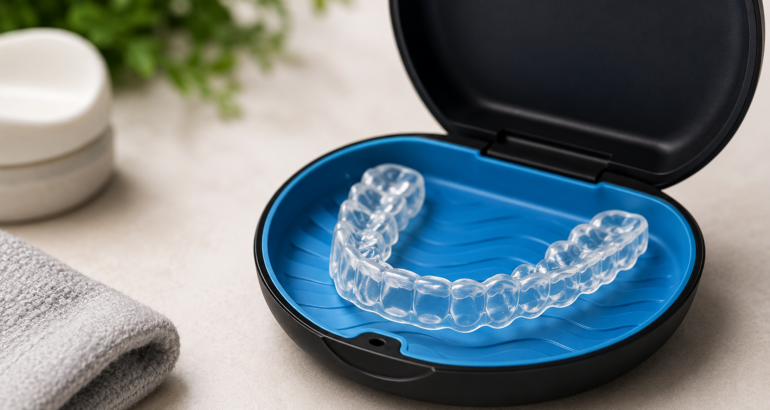
A night guard is one of the most common protective tools in teeth grinding treatment. It is a custom-made appliance worn over the teeth, usually during sleep. Its purpose is to reduce direct tooth-to-tooth contact and protect the teeth from excessive grinding forces.
A custom night guard is different from a ready-made appliance bought without dental evaluation. A professionally prepared guard is designed according to the patient’s teeth and bite. It should fit comfortably and distribute forces more evenly. Poorly fitting guards may feel uncomfortable and may even worsen jaw symptoms in some cases.
A night guard may not completely stop clenching. However, it can help reduce wear, protect fillings and crowns, and create a more controlled surface for the teeth during sleep. It may also help some patients feel less morning jaw fatigue.
Dr. Yaşar Özdemir evaluates whether a night guard is suitable and how it should be designed. The guard must be checked regularly because tooth movement, new fillings or wear can affect its fit over time.
Teeth grinding and jaw joint problems
Teeth grinding can affect the temporomandibular joint, also called the jaw joint. This joint allows the lower jaw to move while speaking, chewing and opening the mouth. When clenching forces are excessive, the joint and surrounding muscles may become overloaded.
Patients may experience clicking sounds, jaw locking, pain near the ear, limited mouth opening or difficulty chewing. Some may feel that the jaw shifts to one side when opening. These symptoms do not always mean surgery is needed, but they should be evaluated carefully.
Jaw joint symptoms can have different causes. Muscle tension, grinding, bite imbalance, trauma, stress and joint disc problems may all contribute. Treating the symptoms without understanding the cause may not provide long-term comfort.
Dr. Yaşar Özdemir evaluates the jaw joint together with the teeth and muscles. If the problem is mainly related to muscle overactivity, night guard therapy, muscle relaxation strategies and bite monitoring may be recommended. If the joint condition is more complex, further evaluation may be needed.
Daytime clenching and habit awareness
Not all teeth grinding happens during sleep. Many patients clench their teeth during the day without noticing it. This often occurs while working on a computer, driving, concentrating, feeling stressed or exercising. Daytime clenching can be just as damaging as night grinding if it continues for long periods.
In a relaxed jaw position, the teeth should not be touching. The lips may be closed, but the teeth should remain slightly apart. The tongue should rest gently, and the jaw muscles should not be tense. Many patients are surprised when they realise how often their teeth are in contact during the day.
Awareness is an important part of daytime clenching control. Patients can check themselves during the day and relax the jaw when they notice tension. Breathing exercises, posture correction, short breaks and stress management may help reduce muscle overuse.
Dr. Yaşar Özdemir explains practical daily habits that support treatment. If daytime clenching is ignored, a night guard alone may not fully protect the teeth and muscles.
Teeth grinding treatment and masseter muscle activity
The masseter muscle is one of the strongest chewing muscles. In patients who grind or clench heavily, this muscle can become enlarged, tense or painful. Some patients notice a square or wider lower face appearance due to strong masseter muscles. Others feel tenderness in the cheek area or fatigue after chewing.
Masseter muscle overactivity may contribute to tooth wear, jaw pain and headaches. In selected cases, treatments aimed at reducing excessive muscle activity may be considered. However, not every patient with grinding needs the same approach. The source of the problem and the degree of muscle activity must be evaluated first.
Masseter botox may be discussed in suitable cases where muscle overactivity is significant. It can help reduce excessive muscle force in selected patients. Still, it is not a universal treatment for all bruxism cases. Some patients need a night guard, bite evaluation, restoration repair or lifestyle support instead.
Dr. Yaşar Özdemir assesses masseter size, tenderness and activity before discussing treatment options. This helps avoid unnecessary procedures and creates a plan based on the patient’s real needs.
Teeth grinding and broken fillings or crowns
Patients who grind their teeth often experience repeated dental restoration problems. Fillings may chip, crowns may crack, veneers may detach or teeth may fracture around old restorations. When this happens repeatedly, repairing the tooth without addressing grinding may not solve the problem.
Excessive clenching places strong pressure on dental materials. Even high-quality restorations can fail if they are constantly overloaded. This is especially important for patients with large fillings, root canal-treated teeth, veneers, crowns or implant-supported prosthetics.
Before replacing a broken filling or crown, the dentist should evaluate why it failed. Was the restoration old? Was there decay underneath? Was the bite too high? Is the patient grinding at night? These questions help prevent the same problem from returning.
Dr. Yaşar Özdemir plans restoration repair together with bruxism management. If necessary, a protective night guard or bite adjustment may be recommended after the restoration is completed.
Teeth grinding and tooth sensitivity
Tooth sensitivity is a common complaint in patients with bruxism. Grinding can wear down enamel and expose sensitive dentin. Clenching forces may also contribute to small cracks or stress-related defects near the gumline. These areas can react to cold, hot, sweet foods or brushing.
Sensitivity may also be connected to gum recession. Excessive forces, aggressive brushing and gum condition can all play a role. When roots become exposed, the teeth may become more sensitive. Treating sensitivity without evaluating grinding may only provide temporary relief.
The first step is identifying the cause. If sensitivity comes from enamel wear, the tooth may need protection and restorative support. If it comes from cracks, a more detailed treatment plan may be needed. If gum recession is present, oral hygiene technique and bite forces should be reviewed.
Dr. Yaşar Özdemir evaluates sensitivity in relation to the whole mouth. This helps determine whether the patient needs desensitising care, filling repair, night guard therapy or other protective treatment.
Teeth grinding and gum recession
Teeth grinding may contribute to stress on the teeth and supporting tissues. In some patients, this can be associated with gum recession or wedge-shaped wear near the gumline. These lesions may appear as notches at the neck of the tooth and can become sensitive.
Gum recession has multiple causes. Aggressive brushing, thin gum tissue, periodontal disease, tooth position and clenching forces may all contribute. This is why a complete evaluation is important. It is not correct to blame every recession area on grinding alone, but grinding can be part of the picture.
If the tooth neck area is damaged, composite restorations may be used in selected cases. However, if excessive force continues, these restorations may wear or break. The underlying clenching habit must also be managed.
Dr. Yaşar Özdemir assesses gum recession, tooth wear and bite forces together. A treatment plan may include oral hygiene correction, sensitivity management, restoration and bruxism protection.
Teeth grinding in children and teenagers
Children and teenagers can also grind their teeth. In children, night grinding may occur during growth and may sometimes be temporary. However, if there is tooth wear, jaw pain, headaches, sleep problems, breathing issues or significant discomfort, dental evaluation is recommended.
In children, grinding may be associated with stress, sleep patterns, nasal obstruction, jaw development or tooth eruption changes. Treatment is not always needed, but monitoring is important. The dentist evaluates whether the teeth are being damaged and whether the jaw development appears normal.
Teenagers may grind because of stress, orthodontic issues, bite problems or lifestyle factors. If they have fillings, braces or aligners, grinding should be considered during treatment planning.
Dr. Yaşar Özdemir evaluates young patients according to age, tooth development and symptoms. The approach is cautious and personalised, avoiding unnecessary treatment while protecting the teeth when needed.
Stress and teeth grinding
Stress does not explain every case of bruxism, but it is a common contributing factor. Many patients report that grinding or clenching becomes worse during busy, anxious or emotionally difficult periods. The jaw muscles may stay tense even when the person does not realise it.
Stress-related clenching can happen during the day or at night. The patient may hold the jaw tight while working, thinking or sleeping. Over time, this constant muscle activity can lead to pain, headaches and tooth wear.
Dental treatment can protect the teeth, but stress management may also be important. Better sleep habits, regular breaks, breathing exercises, physical activity and awareness of jaw posture may help reduce clenching frequency. In some cases, professional support for stress or sleep-related issues may be helpful.
Dr. Yaşar Özdemir explains the role of stress without reducing the problem to “just stress”. The teeth, muscles, bite and lifestyle factors are evaluated together.
Teeth grinding and sleep quality
Sleep-related bruxism can be connected with sleep quality. Some patients grind more during restless sleep, stress periods or sleep disturbances. A person may not remember grinding, but may wake up tired, with jaw pain or headaches.
Snoring, breathing problems, sleep apnea symptoms or frequent waking should not be ignored. Bruxism may sometimes be seen alongside sleep-related breathing issues. If these signs are present, the patient may need medical evaluation in addition to dental care.
A night guard can protect teeth from grinding forces, but it does not treat sleep apnea or breathing problems. This is why the patient’s sleep history should be discussed during consultation. If there are strong signs of sleep-related breathing disorder, appropriate referral may be considered.
Dr. Yaşar Özdemir includes sleep-related questions in bruxism assessment when needed. This supports a safer and more complete approach.
Restoring teeth damaged by grinding
When teeth grinding has already caused visible damage, restorative treatment may be needed. The type of restoration depends on the severity of wear, tooth sensitivity, cracks, bite height and aesthetic concerns. Small chips may be repaired with composite bonding. Larger wear may require crowns, onlays or a more comprehensive rehabilitation plan.
Front tooth wear can affect smile appearance. Teeth may look shorter, flatter or older. Composite bonding may help restore minor edge loss. In more advanced cases, veneers or crowns may be considered. However, any aesthetic restoration must be protected from ongoing grinding forces.
Back tooth wear can reduce chewing efficiency and affect bite balance. If the bite height has changed, treatment becomes more complex. Full-mouth planning may be needed in severe cases. This requires careful analysis before any restoration is placed.
Dr. Yaşar Özdemir restores grinding-related tooth damage with attention to function, strength and natural aesthetics. Protection after restoration is essential to reduce the risk of future breakage.
Can teeth grinding be completely cured?
Teeth grinding can often be managed, but it may not always disappear completely. Some patients grind during specific stress periods and improve over time. Others have long-term bruxism that requires continuous protection and monitoring. Treatment aims to reduce damage, relieve symptoms and protect the teeth and jaw system.
A night guard can protect teeth, but it may not stop the brain-driven habit of clenching during sleep. Muscle-focused treatments may reduce force, but they may not remove all triggers. Stress management can help, but it may not replace dental protection when tooth wear is present.
This is why realistic expectations are important. The goal is not always to “end grinding forever” in one step. The better goal is to understand the patient’s pattern, reduce harmful forces, protect dental structures and manage symptoms over time.
Dr. Yaşar Özdemir explains treatment expectations clearly. Patients are guided with a practical plan that can be adjusted according to symptoms and follow-up findings.
Choosing teeth grinding treatment in Konyaaltı
Choosing teeth grinding treatment in Konyaaltı should involve more than getting a standard night guard. The dentist should evaluate the teeth, muscles, jaw joint, bite and restorations together. Bruxism affects the whole chewing system, so the treatment plan should be comprehensive.
Patients should ask whether their teeth show signs of wear, whether the jaw muscles are overactive, whether the bite is balanced, whether old restorations are at risk and whether a night guard or additional treatment is needed. Clear answers help patients understand the condition better.
The clinic should also provide follow-up. A night guard must be checked over time. Tooth wear should be monitored. If symptoms change, the treatment plan may need adjustment. Bruxism management is often a continuing process rather than a one-time appointment.
Dr. Yaşar Özdemir provides teeth grinding evaluation in Antalya Konyaaltı with a personalised and transparent approach. The focus is on protecting teeth, improving comfort and supporting long-term oral health.
Dr. Yaşar Özdemir for personalised teeth grinding treatment planning
Dr. Yaşar Özdemir approaches teeth grinding treatment as part of complete dental care. The visible signs on the teeth, muscle tension, jaw movement, bite contacts, restorations and patient habits are reviewed together. This helps create a treatment plan that fits the patient rather than relying on a standard solution.
Some patients may only need monitoring and habit awareness. Others may need a custom night guard. Some may require restoration of worn teeth, masseter muscle evaluation, bite adjustment or further jaw joint assessment. The right plan depends on the severity and cause of the symptoms.
For patients in Antalya Konyaaltı who wake up with jaw pain, grind their teeth at night, break fillings repeatedly or notice tooth wear, early evaluation can prevent more serious damage. Bruxism should not be ignored until teeth become severely worn or painful.
Dr. Yaşar Özdemir aims to help patients protect their natural teeth, reduce jaw discomfort and maintain a healthier smile through careful diagnosis, clear explanation and personalised care.
Contact
You can contact Dr. Yaşar Özdemir for detailed evaluation about teeth grinding, jaw pain, night clenching, tooth wear, broken fillings, jaw joint discomfort or custom night guard treatment.
Address: Öğretmenevleri Mah. 922 Sokak No:1 Kat:1-13 Konyaaltı / ANTALYA
English Line: +90 539 301 62 51
Russian Line: +90 533 596 11 23
Contact Line: +90 507 908 63 57
Email: info@dryasarozdemir.com
If you wake up with jaw fatigue, notice worn teeth or suspect night-time clenching, you can take the first step today with a personalised teeth grinding treatment consultation in Konyaaltı.