
Zygomatic implant Konyaaltı
Zygomatic implant Konyaaltı is an advanced implant treatment topic for patients who have severe upper jaw bone loss, long-term denture use, failed conventional implant attempts, or have previously been told that they do not have enough bone for standard dental implants. Dr. Yaşar Özdemir evaluates zygomatic implant treatment in Konyaaltı with a detailed approach that includes upper jaw anatomy, cheekbone support, sinus region, existing bone volume, prosthetic expectations, chewing function, oral hygiene and the patient’s general dental condition. The goal is not simply to place implants, but to create a stable, functional and carefully planned prosthetic solution for complex upper jaw cases.
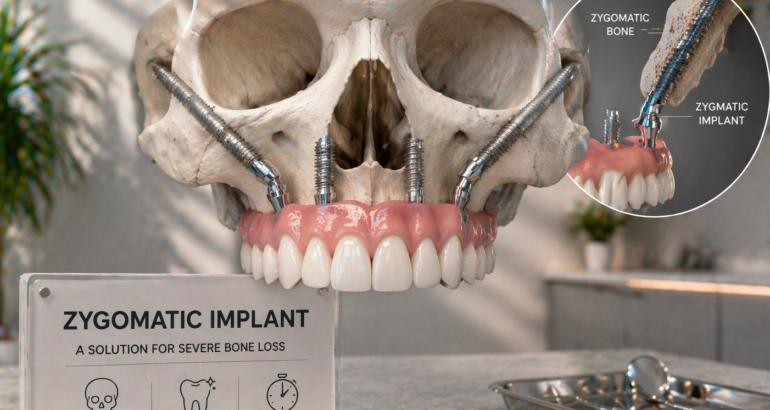
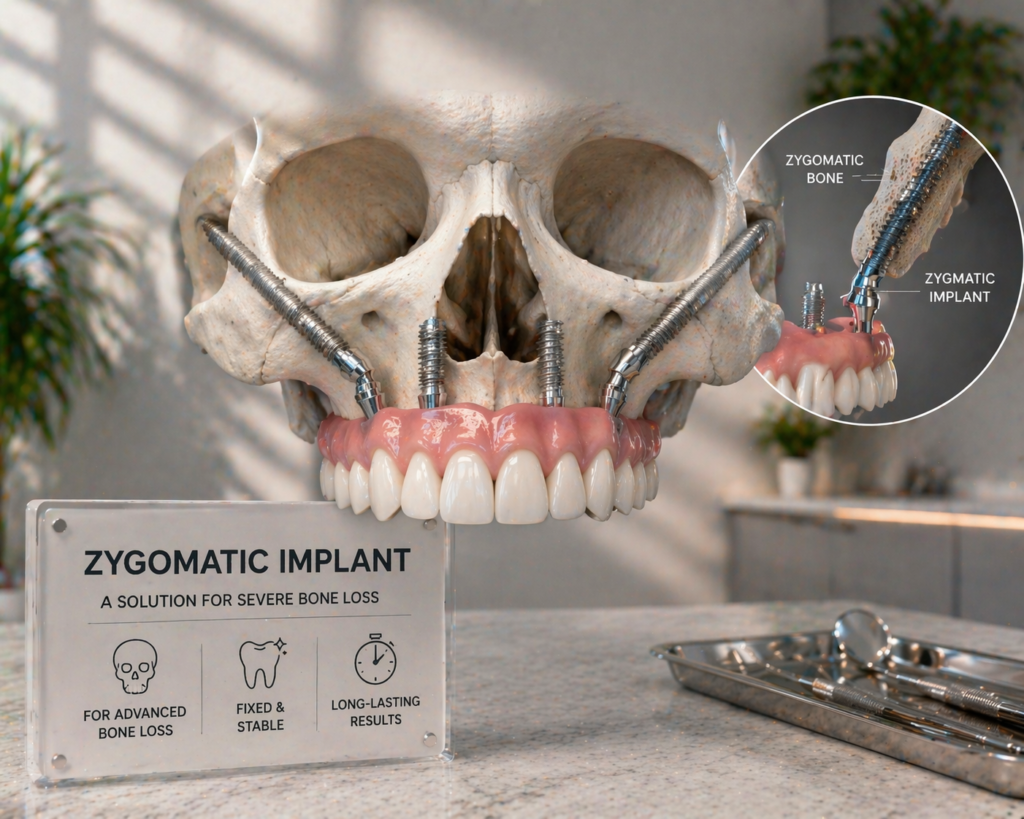
Zygomatic implants are different from standard dental implants. While conventional implants are usually placed into the jawbone, zygomatic implants are longer implants that take support from the zygomatic bone, commonly known as the cheekbone. This approach may be considered when the upper jaw has lost too much bone to support standard implants safely. It is especially relevant in advanced upper jaw atrophy, long-term full tooth loss, or cases where extensive bone grafting may not be the most suitable path.
Dr. Yaşar Özdemir approaches this treatment as an advanced implant planning process. A patient who needs zygomatic implants usually has a more complex dental history than someone with a single missing tooth. Therefore, treatment requires detailed imaging, careful anatomical evaluation, realistic expectations and a prosthetic design that can be cleaned and maintained over time.
Zygomatic implant Konyaaltı: Who may need this treatment?
Zygomatic implant Konyaaltı may be considered for patients with severe bone loss in the upper jaw. This situation often occurs after many years of missing teeth, long-term removable denture use, advanced gum disease, previous infections, trauma or failed implant treatment. When the upper jawbone becomes too thin or too short, conventional implants may not have enough support.
Patients who have been wearing upper dentures for many years may experience progressive bone shrinkage. As the bone resorbs, dentures can become loose, unstable and uncomfortable. Chewing may become difficult, speech may be affected, and the patient may feel less confident in social situations. In such advanced cases, zygomatic implant treatment may offer a fixed or more stable prosthetic option for suitable patients.
However, not every patient with bone loss needs zygomatic implants. Some patients may still be treated with conventional implants, bone grafting, sinus lift, short implants or implant-supported removable dentures. The correct decision depends on the degree of bone loss, sinus anatomy, general health, oral hygiene, prosthetic expectations and surgical suitability.
Dr. Yaşar Özdemir evaluates the patient’s condition individually. If zygomatic implants are appropriate, the reason is explained clearly. If another treatment is safer or more suitable, the alternatives are discussed before any decision is made.
Zygomatic implant Konyaaltı and upper jaw bone loss
Zygomatic implant Konyaaltı is most closely related to advanced upper jaw bone loss. The upper jaw behaves differently from the lower jaw after tooth loss. Over time, the bone can shrink vertically and horizontally. In the back region of the upper jaw, the maxillary sinus may also expand downward, leaving even less bone available for standard implants.
This combination can make conventional implant placement difficult. A standard implant needs enough bone around it for stability and long-term support. If the bone is too thin, too short or too weak, the implant may not be positioned safely without additional procedures. Bone grafting and sinus lift may help in some cases, but they may not always be enough in severe atrophy.
Zygomatic implants are designed to bypass the insufficient upper jawbone and gain support from the stronger cheekbone area. This allows advanced implant-supported prosthetic planning in selected cases. Still, this approach requires precise three-dimensional planning because the implant path is longer and anatomically more complex.
Dr. Yaşar Özdemir assesses the level of upper jaw bone loss carefully before treatment. The treatment plan is based on anatomy, not only on the patient’s desire for fixed teeth.
Zygomatic implant Konyaaltı before treatment planning
Zygomatic implant Konyaaltı treatment must begin with comprehensive clinical and radiological evaluation. A simple visual examination is not enough for this type of advanced implant planning. The dentist must understand the upper jawbone, zygomatic bone, sinus spaces, soft tissue, prosthetic space, bite relationship and overall oral condition.
Three-dimensional imaging is often important in zygomatic implant assessment. It helps evaluate bone volume, sinus anatomy, implant angulation, available support and anatomical limitations. The implant path must be planned carefully because zygomatic implants pass through or near areas that require surgical precision.
The patient’s dental history is also important. Previous dentures, failed implants, old infections, sinus problems, gum disease, systemic health conditions, smoking and medication use can influence the plan. If the patient has uncontrolled systemic disease or active oral infection, these factors must be addressed before advanced surgery is considered.
Dr. Yaşar Özdemir explains the diagnostic process in a clear way. Patients are informed about why detailed imaging is needed, what the examination shows and how the treatment sequence may progress.
What is a zygomatic implant?
A zygomatic implant is a long dental implant designed to anchor into the zygomatic bone, or cheekbone, rather than relying only on the upper jawbone. It is typically considered in patients with severe upper jaw bone loss where standard implants cannot be placed predictably due to insufficient bone.
The zygomatic bone is denser and can provide support in cases where the upper jaw has resorbed significantly. Because of this, zygomatic implants can help support fixed prosthetic teeth in selected full-arch rehabilitation cases. They are not used for routine single-tooth implant treatment.
These implants are longer than conventional implants and require a different surgical path. Their placement must be planned carefully in relation to the sinus, soft tissues, prosthetic design and final bite. This is why zygomatic implant treatment is considered an advanced implant procedure.
Dr. Yaşar Özdemir explains zygomatic implants not only as a technical solution, but as part of a broader rehabilitation plan. The implant, surgery and final prosthesis must work together.
Zygomatic implants vs conventional dental implants
Conventional dental implants are usually placed into the jawbone at the site of the missing tooth. They require enough bone height and width in that area. Zygomatic implants are used when the upper jawbone is not sufficient and support must be obtained from the cheekbone.
The main difference is anatomical support. A conventional implant depends on the alveolar bone, which may shrink after tooth loss. A zygomatic implant is longer and reaches the zygomatic bone. This makes it useful in advanced upper jaw atrophy, but it also makes the treatment more complex.
Conventional implants are suitable for many missing tooth cases. Zygomatic implants are not a first-choice option for routine tooth replacement. They are reserved for selected cases where standard implant planning is limited by severe bone deficiency.
Dr. Yaşar Özdemir evaluates whether conventional implants, bone grafting, sinus lift or zygomatic implants are more appropriate. The treatment is chosen according to the patient’s anatomy and long-term prosthetic needs.
When are zygomatic implants considered?
Zygomatic implants may be considered when the upper jaw has severe bone loss and conventional implant placement is not possible or would require extensive grafting. They are commonly evaluated in full upper jaw tooth loss, severe denture-related bone resorption, failed implant cases and patients who need fixed prosthetic support despite limited maxillary bone.
Patients who have worn removable upper dentures for many years may be candidates if they have enough general health and oral conditions for surgery. These patients often report denture movement, poor chewing, speech concerns or discomfort from denture pressure. A zygomatic implant-supported plan may provide more stability in selected cases.
They may also be considered when previous sinus lift or grafting is not ideal, or when the patient has advanced upper jaw atrophy. However, the decision must be made carefully. Sinus health, oral hygiene, bite force, prosthetic design and the patient’s ability to attend follow-up visits are all important.
Dr. Yaşar Özdemir considers zygomatic implants only when there is a real clinical indication. The patient receives a clear explanation of why this advanced option may be considered.
How is zygomatic implant treatment planned?
Zygomatic implant planning starts with understanding the final prosthesis. The dentist must know where the future teeth should be positioned before deciding where the implants should go. Implant placement and prosthetic design are inseparable in advanced full-arch cases.
The planning process includes evaluation of the upper jawbone, cheekbone support, sinus anatomy, soft tissue condition, smile line, facial support and bite relationship. If the patient has an existing denture, its fit, tooth position and facial support can also provide useful information for future prosthetic planning.
A full-arch prosthesis must be stable, functional and cleanable. It should support the lips properly, allow clear speech and distribute chewing forces evenly. If the prosthesis is difficult to clean or too bulky, long-term maintenance may become problematic.
Dr. Yaşar Özdemir plans zygomatic implant treatment with the final teeth in mind. The goal is not only surgical placement, but a prosthesis that the patient can use comfortably and maintain responsibly.
How is zygomatic implant surgery performed?
Zygomatic implant surgery is an advanced procedure that requires careful anatomical planning. The implants are placed through a specific path to gain support from the zygomatic bone. Depending on the case, zygomatic implants may be used alone or in combination with conventional implants in the front upper jaw.
The surgery is more complex than routine implant placement because the implants are longer and the anatomical region is more delicate. The relationship with the sinus, soft tissues and prosthetic emergence areas must be carefully controlled. This is why detailed imaging and planning are necessary before surgery.
The anesthesia approach depends on the patient, the scope of treatment and clinical decision-making. Local anesthesia, sedation or general anesthesia may be considered according to the complexity of the procedure and the patient’s medical condition. The patient should be informed about the procedure, healing period and possible discomfort after surgery.
Dr. Yaşar Özdemir explains the surgical process before treatment. Understanding the steps helps patients feel more prepared and realistic about recovery.
Is zygomatic implant treatment painful?
Zygomatic implant treatment is performed with anesthesia so that pain is controlled during surgery. Since the procedure is more extensive than standard implant placement, patients may experience swelling, bruising, tenderness, pressure sensation or limited mouth opening during the healing period.
The amount of discomfort varies from patient to patient. A case involving several implants, full-arch prosthetic planning or previous surgical history may have a different recovery experience than a simpler implant case. Patients should not compare zygomatic implant recovery with routine single implant placement.
After surgery, following instructions is essential. Prescribed medications, soft diet, oral hygiene, avoiding smoking and attending follow-up visits all support healing. Increasing swelling, severe pain, fever, persistent bad taste or unusual discharge should be evaluated promptly.
Dr. Yaşar Özdemir gives clear aftercare instructions. The patient learns what is expected after surgery and which symptoms require control.
Zygomatic implants and sinus anatomy
The sinus region is very important in zygomatic implant planning. In the upper back jaw, the maxillary sinus is located close to the implant area. In patients with severe bone loss, the sinus may occupy much of the space where standard implants would normally be placed.
Before zygomatic implant treatment, sinus anatomy must be evaluated carefully. A history of chronic sinusitis, sinus surgery, nasal obstruction or recurrent sinus infections may influence planning. In some cases, additional medical evaluation may be needed before implant treatment.
The relationship between the zygomatic implant and the sinus must be planned precisely. Implant path, angulation and prosthetic emergence all matter. Poor planning may increase the risk of sinus-related complications or prosthetic difficulty.
Dr. Yaşar Özdemir considers sinus anatomy as a key part of the treatment plan. Safe and functional planning requires understanding both dental and anatomical factors.
Zygomatic implants and fixed teeth expectations
Many patients who ask about zygomatic implants want fixed teeth after years of removable dentures. This expectation is understandable. Loose dentures can affect chewing, speech, confidence and social comfort. Zygomatic implant-supported prosthetics may help provide a more stable solution in suitable cases.
However, fixed teeth planning must be realistic. The final result depends on bone anatomy, implant distribution, prosthetic design, hygiene access, bite forces and soft tissue support. A fixed prosthesis must not only stay in place; it must also be cleanable and comfortable.
Some patients may receive a temporary fixed prosthesis during healing, depending on implant stability and treatment plan. Others may need a different temporary phase. Not every case is suitable for immediate fixed teeth. The decision must be made according to surgical and prosthetic safety.
Dr. Yaşar Özdemir discusses fixed teeth expectations openly. Patients are informed about what can be done immediately, what requires healing and how the final prosthesis will be maintained.
Temporary teeth after zygomatic implant surgery
Temporary teeth may be planned in some zygomatic implant cases, but this depends on implant stability, bite conditions and the overall treatment plan. Immediate temporary teeth can improve comfort and appearance during healing, but they must be designed carefully to avoid excessive force on the implants.
A temporary prosthesis is not the same as the final prosthesis. It is part of the healing and adaptation phase. Patients must follow dietary instructions and avoid hard foods during this period. Overloading temporary teeth can create risk for the implants or prosthetic components.
Temporary teeth also help evaluate speech, smile line, facial support and bite before the final prosthesis is made. Adjustments can guide the design of the permanent restoration. This makes the temporary phase valuable in complex full-arch cases.
Dr. Yaşar Özdemir explains the temporary teeth process before surgery. Patients understand whether they are suitable for immediate temporary teeth and how to use them safely.
Final prosthesis after zygomatic implants
The final prosthesis is one of the most important parts of zygomatic implant treatment. The implants provide support, but the patient lives with the prosthetic teeth every day. The final restoration must be comfortable, aesthetic, strong and cleanable.
In severe upper jaw bone loss, the prosthesis may need to replace not only teeth but also lost gum and tissue volume. Pink aesthetic areas may be needed to support the lips and create a natural facial appearance. This is common in advanced full-arch rehabilitation.
The bite must be balanced carefully. Uneven forces may cause prosthetic fractures, screw loosening or discomfort. Patients with teeth grinding require even more careful planning and may need protective measures after treatment.
Dr. Yaşar Özdemir designs the final prosthesis according to the patient’s facial support, chewing needs, smile line and hygiene ability. A good prosthesis should look natural and remain practical to maintain.
Zygomatic implants and oral hygiene
Oral hygiene is essential after zygomatic implant treatment. Implant-supported prostheses must be cleaned properly every day. If plaque and food debris accumulate around the prosthesis, gum inflammation and implant-related tissue problems may develop.
Full-arch prostheses may have areas underneath that require special cleaning tools. Depending on the design, the patient may need interdental brushes, special floss, water flossers or other hygiene aids. The prosthesis must be designed so that the patient can realistically keep it clean.
Regular professional check-ups are also important. The dentist can evaluate implant tissues, prosthetic screws, bite contacts, cleaning quality and any early signs of inflammation. Maintenance should not be ignored after advanced implant treatment.
Dr. Yaşar Özdemir explains hygiene requirements before and after treatment. Patients should understand that long-term success depends on daily care and regular follow-up.
Zygomatic implants and teeth grinding
Teeth grinding, or bruxism, must be considered in zygomatic implant treatment. Patients who clench or grind can generate strong forces on the prosthesis and implants. These forces may increase the risk of prosthetic fracture, screw loosening, porcelain damage or discomfort.
Signs of bruxism include morning jaw fatigue, headaches, worn teeth, broken dentures, cracked restorations and tight jaw muscles. If the patient has a history of breaking dentures or dental work, this should be discussed before treatment.
The final prosthesis must be designed with controlled bite contacts. In some cases, a night guard or other protective measures may be recommended. Ignoring excessive bite forces can reduce the long-term stability of the prosthetic result.
Dr. Yaşar Özdemir evaluates bite forces before planning zygomatic implants. The treatment aims to restore function while protecting the prosthetic structure from excessive stress.
Are zygomatic implants suitable for everyone?
Zygomatic implants are not suitable for every patient. They are advanced implants usually considered in severe upper jaw bone loss. Patients with mild or moderate bone deficiency may be treated with conventional implants, bone grafting, sinus lift or other methods.
General health is important. Uncontrolled systemic conditions, active oral infection, poor hygiene, heavy smoking, certain medications or untreated sinus problems may affect suitability. The patient must also be able to attend follow-up appointments and maintain oral hygiene properly.
Some patients may expect a quick fixed-tooth solution, but their anatomy or health condition may not support that plan safely. In these cases, alternative treatment options should be discussed. Advanced treatment should not be chosen only because it sounds stronger or faster.
Dr. Yaşar Özdemir determines suitability after detailed examination and imaging. If zygomatic implants are not the right option, the patient is guided toward safer alternatives.
Zygomatic implant cost in Konyaaltı
The cost of zygomatic implant treatment in Konyaaltı depends on many factors. These include the number of zygomatic implants, whether conventional implants are combined, surgical complexity, imaging needs, anesthesia approach, temporary prosthesis, final prosthesis type, material selection and follow-up requirements.
This treatment cannot be priced like a standard single dental implant. Zygomatic implant cases are usually full-arch or advanced upper jaw cases, so the prosthetic phase is a major part of the total plan. The final teeth, gum-colored prosthetic areas, laboratory work and maintenance design all affect the cost.
Additional procedures may also influence pricing. Some patients may need extractions, infection control, soft tissue management or correction of existing prosthetic problems before treatment. For this reason, accurate cost information can only be given after detailed evaluation.
Dr. Yaşar Özdemir explains the treatment scope clearly after consultation. The patient understands what is included, why the treatment is complex and how the plan is structured.
What should patients consider before choosing zygomatic implants?
Patients considering zygomatic implants should focus on correct diagnosis, not only on fixed teeth. This treatment requires advanced planning, three-dimensional imaging, careful sinus and cheekbone evaluation, proper prosthetic design and long-term maintenance.
Important questions include: Why are standard implants not enough? Is my upper jaw bone loss severe? Are grafting or sinus lift alternatives possible? How many implants are needed? Will temporary teeth be possible? How will the final prosthesis be cleaned? What are the follow-up requirements? Do I grind my teeth?
The final prosthesis is as important as the implants. It must support the lips, allow speech, distribute chewing forces and remain cleanable. If the prosthesis is poorly designed, even well-placed implants may become difficult to maintain.
Dr. Yaşar Özdemir helps patients understand the full picture before treatment. The decision is made according to anatomy, function, aesthetics and realistic expectations.
Dr. Yaşar Özdemir for zygomatic implant planning in Konyaaltı
Dr. Yaşar Özdemir evaluates zygomatic implant treatment as an advanced rehabilitation option for patients with severe upper jaw bone loss. Before treatment, the upper jaw, zygomatic bone, sinus region, oral tissues, bite forces, prosthetic needs and general health are assessed carefully.
The treatment is not only about implant placement. It is about helping patients who may have struggled with loose dentures, reduced chewing ability, speech discomfort or lack of confidence due to long-term tooth loss. The prosthetic plan, temporary phase, final fixed teeth and maintenance routine must all be designed around the patient’s real needs.
For patients searching for zygomatic implant treatment in Konyaaltı, the first step is a detailed consultation. This allows the level of bone loss, treatment suitability, alternatives, surgical process and prosthetic options to be understood clearly before beginning.
Dr. Yaşar Özdemir offers zygomatic implant planning with attention to advanced surgical accuracy, natural-looking prosthetics, chewing comfort, hygiene access and long-term oral health.
Contact
You can contact Dr. Yaşar Özdemir for zygomatic implant consultation, severe upper jaw bone loss evaluation, full-arch implant planning, fixed teeth options after denture use, implant-supported prosthetics or advanced implant treatment in Konyaaltı.
Address: Öğretmenevleri Mah. 922 Sokak No:1 Kat:1-13 Konyaaltı / ANTALYA
English Line: +90 539 301 62 51
Russian Line: +90 533 596 11 23
Contact Line: +90 507 908 63 57
E-mail: info@dryasarozdemir.com
If you have been told that you do not have enough upper jawbone for standard implants, you can take the first step today with a personalized zygomatic implant evaluation by Dr. Yaşar Özdemir in Konyaaltı.